If you are considering an ultra-luxury waterfront estate on Sunset Island, a beautiful kitchen or a long dock is only the beginning. At this level, value is shaped by what you cannot fully see during a casual showing: water orientation, flood resilience, marine permitting, land-use constraints, and the quality of the estate’s long-term resale story. If you want to assess a trophy property with more confidence, this guide will help you focus on the due diligence that matters most. Let’s dive in.
Why Sunset Island Requires Micro-Market Analysis
Sunset Islands should be treated as a true micro-market, not as a broad Miami Beach waterfront label. The City of Miami Beach GIS separates the area into Sunset Islands 1 & 2 and Sunset Islands 3 & 4, which means parcel-level differences can matter more than the island name itself.
For you as a buyer, that changes how you evaluate value. Two homes on the same island group can offer very different water exposure, privacy, outdoor usability, and future appeal depending on exact lot orientation and surrounding conditions.
The broader 33140 market provides useful context, but it is not a direct comp set for a trophy estate on Sunset Island. In Q1 2025, 33140 single-family homes recorded 24 closed sales, a median sale price of $4.2 million, an average sale price of $7.9 million, 131 active listings, and 14.3 months of supply, but a top-tier waterfront estate should be underwritten much more carefully than a general zip-code average suggests.
Miami Beach also sits at the top of the county’s luxury market. In 2025, MIAMI REALTORS reported a $27.5 million luxury threshold and a $45.6 million uber-luxury threshold for single-family homes, reinforcing how specialized this segment has become.
Start With Lot Orientation and Water Exposure
On Sunset Island, orientation is not just a lifestyle detail. It directly affects privacy, view corridors, usable outdoor space, and how the home connects to the water.
You should look closely at which side of the parcel captures the strongest water corridor and which areas feel most exposed to neighboring rooflines or adjacent properties. A lot that reads as impressive on paper may feel less compelling in person if its outdoor living areas lack privacy or if the view line is narrower than expected.
This is why parcel-by-parcel analysis is so important. The best estate is not always the one with the largest published frontage or the best-known address, but the one with the most defensible relationship to water, light, and open space.
Questions to ask about orientation
- Where do the main living spaces and primary suite face?
- How much of the water view is protected by the parcel’s positioning?
- Which outdoor areas are most usable during different times of day?
- How visible are neighboring homes, docks, and rooflines from key entertaining spaces?
- Does the lot shape support privacy as well as view quality?
Evaluate Flood Resilience With the Site
In Miami Beach, flood risk is part of waterfront ownership. The city states that its low elevation near sea level can lead to flooding from heavy rainfall, high tides, and storm surge.
That means you should assess a property’s resilience at the site level, not just by checking whether it has waterfront appeal. Finished-floor elevation, drainage patterns, and the condition of hardscape near the seawall can all affect how a home performs over time.
A polished renovation does not replace physical resilience. If you are comparing two estates, the better long-term choice may be the one with stronger site planning and more durable flood-aware improvements, even if the finishes feel less current.
What to review on flood and resilience
- Finished-floor elevation
- Drainage patterns across the lot
- Low points near outdoor entertaining areas
- Condition of seawall-adjacent paving and hardscape
- Any signs of recurring water intrusion or settlement
- Official flood-hazard mapping used during diligence
For flood-risk confirmation, Miami Beach directs residents to flood-awareness and resilience resources, and FEMA’s Flood Map Service Center remains the official source for flood-hazard mapping products. In practice, this should be reviewed alongside your survey and site inspections, not in isolation.
Verify Buildability Before Pricing Future Potential
Many buyers in this segment are not just purchasing the existing home. They are also pricing in expansion, a major renovation, or a future custom rebuild.
Before you assign value to that upside, confirm what is actually allowed. The City of Miami Beach states that its Comprehensive Plan is the controlling land-use document in Florida, and the Planning Department reviews building plans for zoning compliance.
That makes zoning, setbacks, and permit constraints central to your underwriting. A parcel may appear to offer future flexibility, but the real answer depends on what local rules permit and how those rules apply to the site.
Key buildability checks
- Current zoning classification
- Required setbacks
- Lot coverage limits
- Height and bulk considerations
- Existing permit history
- Any constraints affecting additions, reconfiguration, or redevelopment
For a trophy buyer, this step matters because future optionality supports long-term value. If a property cannot accommodate your likely design program or a later buyer’s expectations, that limitation can affect exit liquidity.
Treat Dockage and Seawalls as Core Value Drivers
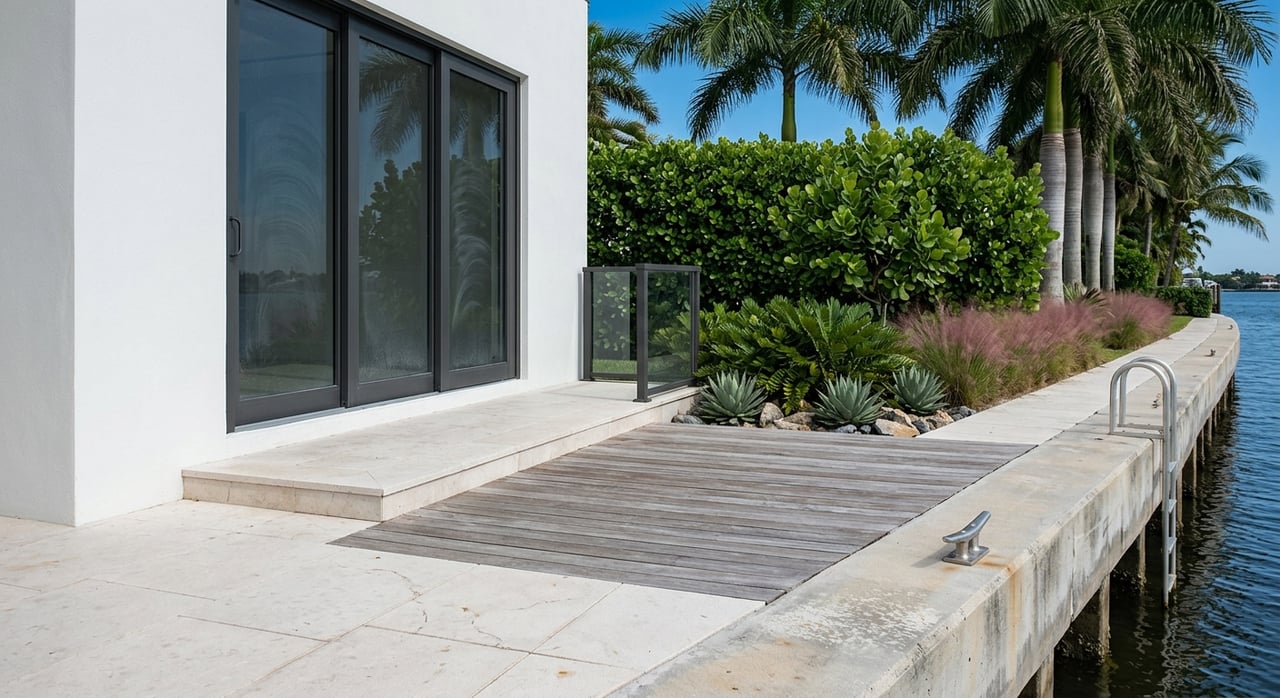
On Sunset Island, marine improvements are part of the asset itself. Dockage, seawalls, lifts, and shoreline conditions should be evaluated with the same care you would give the residence architecture.
In Miami-Dade County, a Class I Coastal Construction Permit is required for most work in, on, over, or upon tidal waters and coastal wetlands. That includes dock and seawall construction or replacement, boatlifts, davits, mooring and fender pilings, dredging and filling, and mangrove trimming or removal.
For you, this means every marine element should be checked against the permit record. If the physical improvements do not match what was approved, that discrepancy can become a material diligence issue.
Questions to ask about marine improvements
- Does the existing dock match the permit drawings?
- Has any seawall work changed the legal footprint?
- Were lifts, davits, or pilings added or modified later?
- Is the water depth appropriate for your intended vessel?
- Does the turning radius support practical use?
- Could any shoreline feature trigger added environmental review?
Miami-Dade also requires annual operating permits for recreational boat docking facilities with 10 or more slips and for all commercial docking facilities. While most private estates will not function like a marina, unusually large docking setups or future multi-slip ambitions should trigger a deeper permit-history review.
Factor Environmental Constraints Into Usability
Environmental rules can directly affect how you use and improve a waterfront estate. In Miami-Dade, manatee protection planning helps guide the siting of new or expanded marine facilities, and vessel collisions are identified by the county as the leading known cause of manatee deaths in Florida.
This matters because dock placement, vessel size, and operating patterns are not just operational questions. They can influence what future modifications are practical and how straightforward the permitting path may be.
For an ultra-luxury buyer, the takeaway is simple: do not separate lifestyle plans from environmental review. If boating is central to how you intend to use the property, your marine diligence should reflect that from the start.
Look Beyond Finishes to Design Pedigree
At the top of the market, design pedigree is broader than premium materials or a recently renovated interior. On Sunset Island, pedigree can come from original design lineage, a respected architect, or a coherent rebuild that feels site-specific and lasting.
Miami Beach places strong value on architecture and preservation. The city’s Historic Property Viewer lists Sunset Island Bridges #1, 2, and 4 as contributing historic properties from 1927 in the Mediterranean Revival style, and the city notes that historic districts include more than 2,600 buildings, with about 70% considered contributing or historic.
That context shapes buyer perception. Even when a home is fully contemporary, it benefits from feeling rooted in Miami Beach’s architectural identity rather than interchangeable with waterfront product in another market.
What design pedigree can mean here
- Recognized architectural authorship
- A clear and coherent design story
- Strong site-specific planning
- Materials and detailing that suit the setting
- A renovation or rebuild that feels intentional rather than trend-driven
In practical terms, the best estates often present both visual impact and narrative depth. That combination tends to hold attention better in a competitive trophy market.
Include Infrastructure in Your Exit Strategy
Ultra-luxury buyers often focus on the residence and the lot, but public infrastructure also matters. Miami Beach is upgrading water and sewer infrastructure in Sunset Islands II and III, with work that began in September 2025 and is expected to finish in May 2026.
The city has also prioritized $95 million across 20 resilience projects, including work on Sunset Islands 3 and 4. These projects can support long-term confidence, but they also signal that neighborhood disruption and ongoing resilience investment should be part of your analysis.
If you are evaluating long-term ownership, ask how current and planned public works intersect with your timeline. Infrastructure improvements can support future marketability, but buyers should still account for construction periods, access changes, and the practical realities of living through upgrades.
Build a Resale Thesis Before You Buy
In a market this rarefied, the strongest purchases usually begin with a clear resale thesis. Miami Beach remains one of the country’s largest vacation-home markets, with 13,817 vacation homes representing 22% of the housing stock, and MIAMI REALTORS found that 75% of sales in South Florida vacation-home markets were all-cash in 2025.
That supports a buyer pool that is often discretionary, cash-heavy, and highly sensitive to scarcity. In that environment, the best long-term resale candidates are likely to be estates with defensible water access, compliant marine improvements, durable flood resilience, and a design story that still feels rare at the top of the market.
That is not a guarantee of future performance. It is a disciplined way to think about what remains valuable when market conditions shift and buyers become more selective.
A Practical Due Diligence Framework
If you are evaluating an ultra-luxury waterfront estate on Sunset Island, your diligence process should be structured around specialists, not just showings. Survey, marine, insurance, title, legal, and land-use review all play a role in understanding true value.
A practical framework includes:
- Survey review: Confirm boundaries, frontage, dock configuration, and any encroachments.
- Marine review: Verify dock, seawall, lifts, depth, turning radius, and permit alignment.
- Flood and insurance review: Evaluate elevation, flood exposure, drainage, and insurability considerations.
- Land-use review: Confirm zoning, setbacks, permit history, and future buildability.
- Design review: Assess architectural pedigree, site planning, and long-term appeal.
- Infrastructure review: Factor in current and planned city resilience or utility projects.
At this level, the winning property is rarely defined by one standout feature alone. It is the one that performs best across the full stack of legal, physical, marine, and design considerations.
If you want a more strategic perspective on Miami Beach luxury real estate, including how discerning buyers evaluate scarce, design-led assets, Anca Mirescu offers a polished, consultative approach shaped by high-value transactions and white-glove service.
FAQs
What makes Sunset Island different from other Miami Beach waterfront areas?
- Sunset Island should be analyzed as a micro-market, with parcel-level differences in orientation, water exposure, privacy, and usability carrying significant weight.
Why is lot orientation so important for a Sunset Island estate?
- Lot orientation can affect view corridors, outdoor living quality, privacy from neighboring homes, and the overall utility of a waterfront setting.
What flood-risk items should you review for a Sunset Island waterfront home?
- You should review finished-floor elevation, drainage patterns, seawall-adjacent hardscape, site low points, and official flood-hazard mapping during due diligence.
What permits matter for docks and seawalls in Miami-Dade County?
- Miami-Dade requires a Class I Coastal Construction Permit for most work involving docks, seawalls, lifts, pilings, dredging, filling, and certain shoreline-related improvements in tidal waters and coastal wetlands.
Why should buildability matter when buying a luxury Sunset Island home?
- Buildability affects whether you can expand, renovate, or rebuild in the future, so zoning, setbacks, and permit constraints should be confirmed before you price in future upside.
How can infrastructure projects affect a Sunset Island property purchase?
- Infrastructure and resilience projects can support long-term confidence, but they may also create temporary disruption and should be considered as part of your ownership and resale planning.