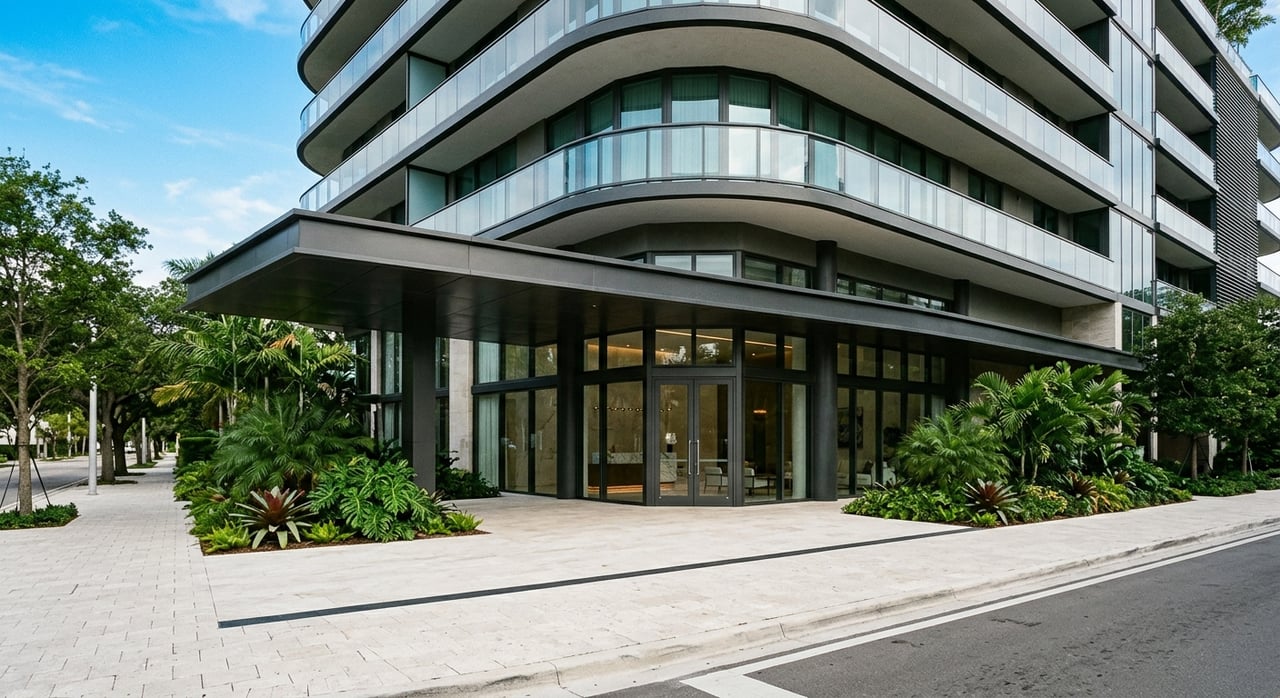
Are you thinking about moving investment equity into a Miami luxury condo through a 1031 exchange? It can be a smart way to reposition your portfolio, but the details matter. Between IRS timing rules, condo document review, and Miami Beach rental restrictions, one missed step can change the outcome. This guide will help you understand the key rules, the local market context, and the condo-specific questions to ask before you move forward. Let’s dive in.
Why a Miami Luxury Condo Can Appeal
If you are considering a 1031 exchange, Miami luxury condos can stand out for both lifestyle and investment reasons. The market offers globally recognized waterfront real estate, strong demand from second-home and vacation-home buyers, and a broad range of high-end inventory.
The local numbers help frame the opportunity. In Q2 2025, the City of Miami recorded 642 condo and townhome closings, with a median sale price of $610,000 and an average sale price of $970,114. In Miami Beach, there were 413 closed condo and townhome sales, with a median sale price of $500,000 and an average sale price of $1,257,602.
For luxury buyers, Miami-Dade’s condo luxury threshold rose to $3.0 million in 2025. That is especially relevant if you are exchanging into a premium residence or trophy asset. It also signals how the county defines the upper tier of the market today.
Miami Beach has another defining trait: it is a major vacation-home market. MIAMI REALTORS reported that Miami Beach ranked as the No. 2 largest vacation-home market in the country, with 13,817 vacation homes representing 22% of the housing stock. That does not guarantee performance, but it does show the market’s depth and visibility among lifestyle and second-home buyers.
What Qualifies for a 1031 Exchange
Before you focus on buildings, views, or amenities, start with the tax framework. Under current federal law, Section 1031 applies only to real property held for productive use in a trade or business or for investment.
That means property held primarily for sale does not qualify. It also means that if you receive cash or other non-like-kind property as part of the transaction, you may trigger taxable gain on that portion.
If your exchange involves a condo or dwelling unit with some personal use, the analysis gets more specific. Revenue Procedure 2008-16 provides a safe harbor for dwelling units if you hold the property for at least 24 months and, during each of the two 12-month periods before and after the exchange, you rent it at fair rental for at least 14 days while keeping personal use within the allowed limits.
The personal-use limit under that safe harbor is the greater of 14 days or 10% of the number of days the unit is rented at fair rental. This safe harbor addresses the investment or business-use test. It is one reason your intended use of the replacement condo should be clear before you buy.
Why Timing Matters So Much
A deferred exchange gives you flexibility, but it also gives you a firm calendar. After the sale of your relinquished property, you generally have 45 days to identify replacement property and 180 days to receive it, or until your tax return due date including extensions, whichever comes first.
Those deadlines are strict enough that many buyers begin evaluating options before their original property closes. In a luxury condo market, that preparation can help you move quickly when the right property becomes available.
The IRS also allows common identification methods such as the three-property rule and the 200% rule. These rules can give you room to shortlist options, but they do not reduce the need for early planning and organized document review.
The Qualified Intermediary Is Central
A qualified intermediary, often called a QI, is the standard structure used to help avoid your actual or constructive receipt of the sale proceeds. If you touch the funds directly, the exchange can become taxable.
The QI must be a non-disqualified person and the exchange should be governed by a written agreement that limits your access to the proceeds. In practical terms, this is one of the most important parts of the process. A well-structured exchange depends on getting the mechanics right from the start.
The transaction is generally reported on Form 8824. While your tax and legal advisors should guide the filing details, it helps to know that the paperwork trail matters just as much as the purchase itself.
Miami Beach Factors to Review Before You Buy
When you exchange into a luxury condo in Miami Beach, local condo rules and building records deserve close attention. These issues are not side notes. They can affect your costs, holding strategy, and even whether a building fits your intended use.
Condo inspection and reserve rules
Florida law requires milestone inspections for residential condominiums and co-ops that are three or more stories tall. The first inspection is triggered 30 years after the certificate of occupancy, or 25 years if the building is within 3 miles of a coastline, and then every 10 years after that.
Associations existing on or before July 1, 2022 were also required to complete a structural integrity reserve study, or SIRS, by December 31, 2024. If a milestone inspection is due on or before December 31, 2026, the SIRS may be completed at the same time, but not later than December 31, 2026.
For budgets adopted on or after December 31, 2024, unit-owner-controlled associations that are required to obtain a SIRS generally cannot waive or underfund the required structural reserves. For buyers, that makes reserve funding and upcoming repair obligations a core due diligence item.
Condo documents you can request
For Florida condominium resale contracts entered after December 31, 2024, contracts must include clear language about milestone inspections, turnover reports, and SIRS status. Prospective buyers are entitled to current copies of key documents.
These documents include:
- Declaration
- Bylaws
- Budget
- Financial statement
- Structural integrity reserve study
- Milestone inspection summary
- Related association documents
If you are evaluating a replacement property under a tight 1031 timeline, requesting these documents early can save valuable days.
Rental Rules Can Make or Break Your Strategy
If your plan depends on rental use, confirm the building’s rules and the city’s rules before you identify the property for your exchange. This is especially important in Miami Beach, where short-term rental regulations are highly specific.
According to the City of Miami Beach, rentals of less than six months and one day are prohibited in all single-family homes and in many multifamily buildings in certain zoning districts. Where short-term rentals are allowed, the property needs zoning approval, a Business Tax Receipt, a Resort Tax account, and a current association letter confirming that the specific unit is allowed to operate as a short-term rental.
The city also requires the Business Tax Receipt number and resort-tax number to appear in listings. For an investor, this means you should never assume that a luxury condo can be rented the way you intend just because the location is desirable or the building is high-end.
Questions to Ask Before You Exchange
A 1031 exchange into a Miami luxury condo works best when your tax, legal, and real estate planning are aligned early. The most useful questions are often the simplest ones.
Ask these first:
- Does your relinquished property qualify for 1031 treatment?
- Will the replacement condo be held for investment or business use?
- Can you meet the 45-day identification deadline?
- Can you close within the 180-day exchange period?
- What do the building’s reserve and inspection records show?
- Do the building’s rental rules match your intended use?
Each question helps reduce a different kind of risk. Some protect the exchange itself. Others protect the quality of the asset you are buying.
Why Property Selection Matters in Miami Beach
In a market like Miami Beach, not all luxury condos serve the same buyer goal. Some buyers want a design-forward residence with global appeal. Others want a lock-and-leave second home, or a property that fits a longer-term investment hold.
Location also shapes the ownership experience. Miami Beach identifies South Beach as one of its core neighborhoods, along with Mid Beach and North Beach, and the South Beach trolley serves many destinations in the area. For some buyers, access, neighborhood identity, and day-to-day convenience are part of the investment equation, especially when choosing a property that may later be resold into a global buyer pool.
A More Strategic Way to Approach the Exchange
The strongest 1031 exchange decisions usually combine tax discipline with asset discipline. You are not only trying to preserve exchange treatment. You are also choosing a condo that fits your holding period, operating plan, and long-term exit strategy.
That is where a highly informed buying process becomes valuable. In Miami Beach’s luxury segment, buyers often need guidance that goes beyond unit features and pricing. They need help assessing building rules, understanding the market tier, and narrowing choices quickly when exchange deadlines are already running.
For buyers considering a design-led, amenity-rich luxury condominium in Miami Beach, a private presentation can help clarify fit, availability, and strategy. To explore opportunities with a finance-savvy, concierge-level approach, connect with Anca Mirescu.
FAQs
What kind of property qualifies for a 1031 exchange into a Miami condo?
- A property generally must be real property held for productive use in a trade or business or for investment. Property held primarily for sale does not qualify.
How long do you have to complete a 1031 exchange after selling your original property?
- In a deferred exchange, you generally must identify replacement property within 45 days and receive it within 180 days, or by your tax return due date including extensions, whichever comes first.
Why is a qualified intermediary important in a 1031 exchange?
- A qualified intermediary is commonly used to prevent your actual or constructive receipt of sale proceeds. If the structure fails and you receive the funds, the exchange may become taxable.
What condo documents should you review before buying in Miami Beach?
- You should review the declaration, bylaws, budget, financial statement, structural integrity reserve study, milestone inspection summary, and related association records that the seller or association must make available.
Can you use a Miami Beach luxury condo for short-term rentals after a 1031 exchange?
- It depends on the city’s zoning rules, the building’s rules, and required approvals. In Miami Beach, rentals of less than six months and one day are prohibited in many situations, so you should confirm the exact rules for the specific unit and building.
What makes Miami Beach relevant for luxury condo investors?
- Miami Beach has an active condo market, a strong vacation-home presence, and a luxury segment defined in Miami-Dade at $3.0 million and above in 2025, all of which make it a market many exchange buyers evaluate closely.